The Six Biggest Nonprofit Executive Succession Mistakes and How to Avoid Them

Executive director succession–planning for and managing the change from one chief executive to the next–is one of the nonprofit board’s most important responsibilities and possibly their least understood job. This isn’t surprising. Executive transitions are infrequent, and managing them requires skills that fall well beyond routine governance roles. Plus, succession projects are complicated and time-consuming. On top of that, succession planning remains a sensitive topic in many organizations.

This article outlines some of the most common executive director succession mistakes, what drives them, and how good preparation helps you avoid them.

Read more

Seven Types of Executive Director Transitions and How to Manage Them

While every nonprofit and its executive director transition is unique, leadership transitions tend to follow seven broad patterns. Each of these types requires its own set of actions to manage the transition effectively.

We’ll get into the types in a moment, but first, let’s look at some of the overall factors that most influence the transition and, therefore, the approach to managing it.

Read more

Two Courageous Questions to Ask Before Launching Your Executive Director Transition

Before forging ahead with an executive director transition and hiring a successor, there are two courageous questions that the board should ask about their nonprofit: should our organization continue? And a related question: should it continue in its current form?

These questions are seldom asked because we’re usually operating in business-as-usual mode. Our work is a continuum of opportunities and challenges. And leadership succession is just another problem to solve. Thus, we don’t recognize succession for what it is — a critical punctuation point in the organization’s history.

Read more

Three Executive Succession Plans Your Nonprofit Should Have

The term “succession planning” can mean different things to different people. Some think it results in an “insurance policy” that ensures continuity when a leader is unexpectedly unavailable. Others, especially corporate board members, think it’s about leadership development — a plan to groom a single leader or a program to create a pipeline of leaders. Still others believe it’s an exit strategy for a soon-to-retire executive. All three of these interpretations are correct.

Read more

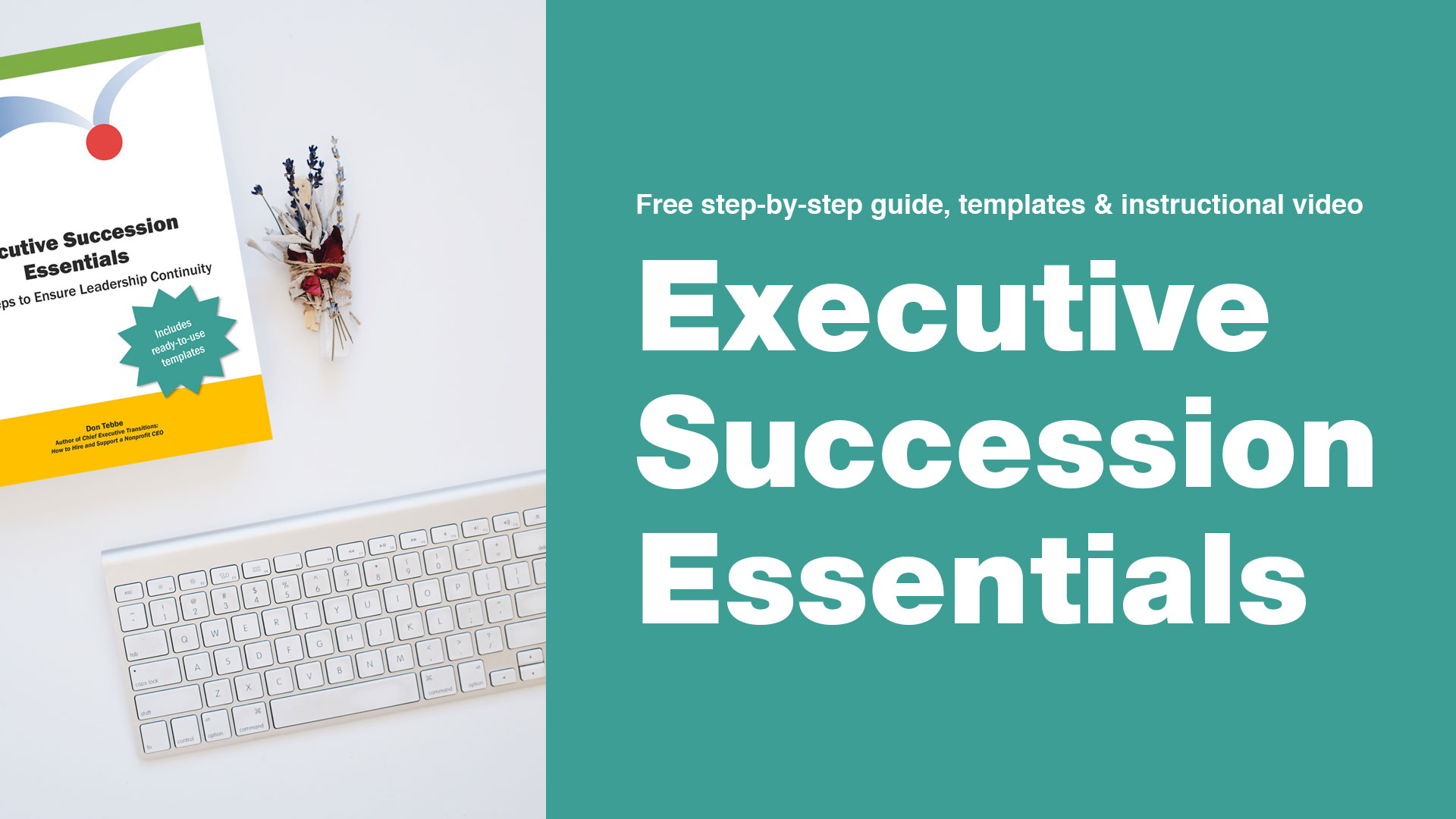
Get Your Succession Plan in Place—Quickly and Easily

No succession plan? Don’t leave your nonprofit unprepared. With this free step-by-step guide, you can establish the essential elements of a succession plan for your executive director. What You’ll Get: What Succession Essentials will do for you And best of all, the guide, video, and templates are completely free. Download Your Free Guide and Templates … Read more

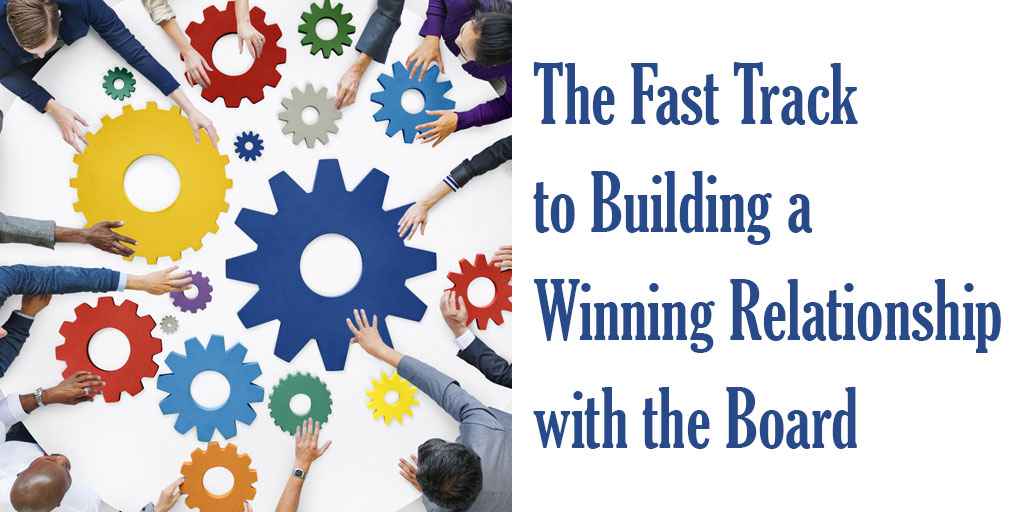
The Fast Track to Building a Winning Relationship with the Board

Laura Mitchell reached for the phone and dialed the number. As she was waiting for the answer, she arranged the papers on her desk with the questions she was about to ask. Laura, a newly hired nonprofit CEO, just 23 days on the job, was completing her final “get-to-know-you” conversations with members of her new board.

Because she knew how critical it is to build relationships with board members early, she arranged a series of lunches, coffees, and phone calls with individual members of the board. She knew this investment of effort early on would pay huge dividends later.

Read more

Book Summary: A field guide to better thinking.

Intuition Pumps book cover

Intuition Pumps and Other Tools for Thinking

by Daniel C. Dennett

Daniel Dennett’s Intuition Pumps and Other Tools for Thinking serves as a toolkit for identifying flawed arguments, sharpening valid ones, and seeing the world more clearly — a guide for clearer, more disciplined thinking. It explains how to use structured “thinking tools” — mental devices that assist us in reasoning, questioning assumptions, and finding hidden mistakes. The book’s main message: good thinking isn’t about innate genius but about using better tools.

Read more

Book Summary: See better, lead better

Book cover for Reframing Organizations

Reframing Organizations: Artistry, Choice, and Leadership, 7th Edition

by Lee G. Bolman and Terrence E. Deal

Leaders usually don’t fail for lack of intelligence or effort—often they fail because they view complex situations through too narrow a lens. This book shows how to think in four dimensions—structure, people, politics, and meaning—so you can see organizations clearly, diagnose problems accurately, and lead with agility.

Read more

Every Executive’s Departure Has a Style. What Will Be Yours?

Get my replacement here at least six months before I leave so I can train him. That was how Alice⁠[*] responded to my question about how she saw the upcoming CEO transition going.

The organization Alice directed had just hired me to find her successor and advise them on the transition between Alice and the new CEO. My response to her statement could have been, “No cause for alarm.” Alice was retiring as the CEO, and transitions and retirement always create an element of anxiety. Additionally, departing executives often overestimate how much overlap their successors will require.

But, the way she said it — staccato, jabbing her index finger into her palm to emphasize each word — THAT was more than a little concerning. I thought, “Oh boy, I may be dealing with a ‘general’ here.

Read more

Book Summary: Mastering the art of connection

4 Essential Keys to Effective Communication

Strong relationships are built on clear, empathetic communication. In 4 Essential Keys to Effective Communication, Bento C. Leal III provides a practical guide to mastering four foundational skills—empathic awareness, empathic listening, empathic speaking, and empathic dialogue. These tools help readers improve their connections at home, at work, and anywhere else relationships matter.

Read more